
Energy Performance Certificates
On 8 December 2020 it became mandatory for building owners to display Energy Performance Certificates (EPCs) for their buildings. The cut-off date for this submission is 7 December 2025. Non-compliance or failure to display an EPC may result in fines or legal action.
Compliance Criteria
Building Registration
On the 3rd of August 2023, it became mandatory for building owners to register the type and size of their building on the National Building Energy Performance Register maintained by SANEDI within 12 months. Therefore all building owners must register their buildings on the NBEPR before the 2nd of August 2024. Let PEC Energy assist you with registration.
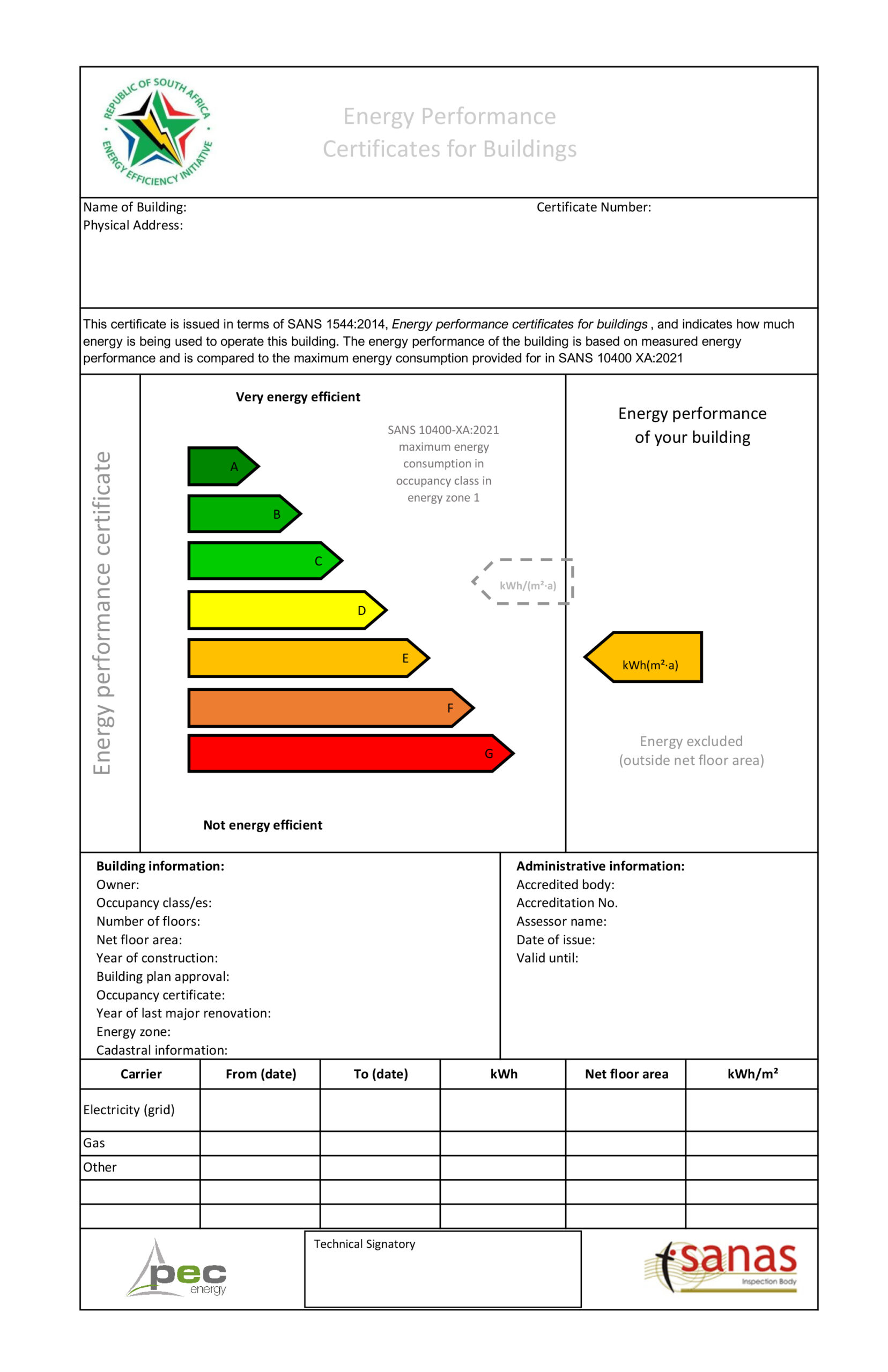
Example of EPC Certificate
What Is An EPC?
An Energy Performance Certificate (EPC) is a certificate that shows a property’s energy efficiency performance, indicating how much energy is being used to operate the building relate to the floor area. A rating from A to G is given to the building, A (most efficient) to G (least efficient). An EPC is valid for 5 years.
Energy Performance Certificates can be beneficial to building owners. It helps property owners make informed decisions about energy costs and environmental impact. An energy efficient building typically has a lower energy usage and can lead to lowered costs. A good EPC rating can increase your property value and can assist in marketing. Lowering energy consumption means reduced greenhouse gas emissions.
The EPC Process
PEC’s EPC team will do a preliminary inspection and determine whether the building requires an EPC.
The client will provide the EPC team with data and information relevant to the EPC process.
The data and information received from the client will be analyzed.
A site inspection will be performed by our qualified professionals.
Data will be processed and the rating will be calculated.
An EPC will be issued to the client.